Monday, 28 June 2021

The pandemic and the agony of primary care

Andreu Segura


I thank Xavier Blancafort for the photograph, as well as 
his suggestions, I also thank Laia Riera and Vicente Giner.

COVID-19 has been a real stress test for Spanish health system as a whole, especially for primary care services (PC) ‒particularly in the most advanced phases of the pandemic‒ and public health facilities (SP) in general, although these are rarely the object of evaluation, although we have all paid for their limitations and deficiencies. For some time now, both levels of the national health system have been languishing as illustrated - although, in my opinion, this is not the worst - the continued decline in the proportion of the public health budget that corresponds to them, especially in the SP, which does not reach 2% of the total. Of course, the proportion of spending is not a sufficiently precise indicator of the efficiency neither of the efforts nor the value that its activity contributes to improving and maintaining the population health. That is why I consider the absence of health strategies more serious and, even worse, healthy public policies, since the appeals to health in all policies have been above all rhetorical. Healthy public policies should naturally include health policy, so that it could effectively contribute to the collective promotion and protection of community health, as one more element along with educational, labour, urban, economic policy, etc.

Monday, 21 June 2021

More primary care, a disruptive innovation

Jordi Varela
Editor


One of the bad news that 2020 brought has been Clayton Christensen's death, a Harvard Business School professor who developed the theory of disruptive innovation and who already deserved the care of our blog with the commentary on the book The Innovator's Prescription, where the author analyzes the reasons why healthcare systems are so refractory to innovation. As I believe that the effort that Christensen has made to adapt his theory of innovation to healthcare is worth it, as a tribute, I have recovered a video of a lecture he gave at King's Fund in 2013.

Monday, 14 June 2021

Do we really want to change things? About Kotter’s 8 steps

Jordi Varela
Editor


Our iceberg is Melting is a fable that illustrates very well that detecting problems is not the same as wanting to fix them. Fred, an observant penguin, realizes that his iceberg is cracking, a matter that will be catastrophic for the entire colony living obliviously to the problem. The author, John Kotter uses the fable to unravel the 8 steps that any individual, in Fred's circumstances, should follow if they want to save the penguin colony:

Monday, 7 June 2021

The health care system of the future is here now

Josep Mª Monguet


Who took the chestnuts out of the fire?

In difficult moments, everything is shown as it is and that is when authentic leadership can be identified. In this sense, a revelation of the recent stage, which we could already intuit, is that health care professionals have shown an exceptional capacity for response. It’s not a common occurrence in the public system. Despite the multiple deficiencies faced, they have assumed the difficult part of the situation and overcome it.

Monday, 31 May 2021

Baker's Decalogue for high-performance healthcare organizations

Jordi Varela
Editor


Americans trust that competitiveness is the essence of human activity, which has made them the world's leading power, with China's permission. This principle, however, has not worked for them when they have applied it, without palliative, to their health care system, which is showing clear signs of poor performance: it’s very costly, it’s inequitable and it’s showing poor results. For this reason, some public health care organizations such as Veterans Affairs and Medicare, or private, such as Mayo Clinic, Cleveland Clinic or Kaiser Permanente, are trying to put sanity, analyzing what are the keys to improve the performance of the system.

Monday, 24 May 2021

Serenity Management

Salvador Casado


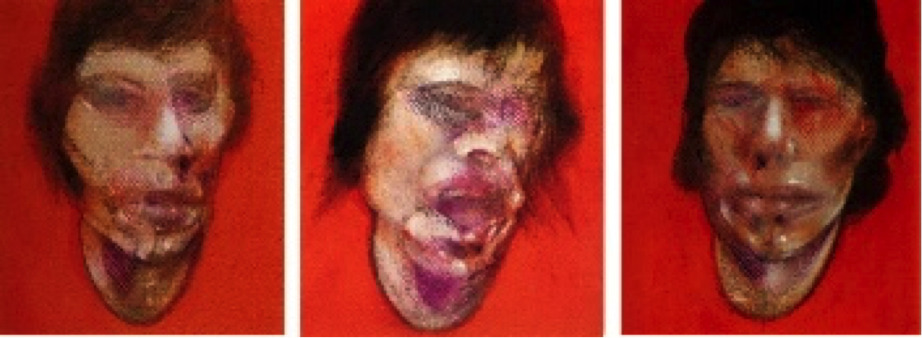
Three studies for a portrait (Mick Jagger), 1982. Francis Bacon
The global pandemic we are living through has been a time of tension, shock, worry, uncertainty, storm, haste and noise. Its management at the political, social and health levels seems to have been very improvable due to the great level of complexity it has entailed for everyone. Many things have been done, many things have been said and many things have been wrong. What we have perhaps missed is more serenity. For this reason, it would be pertinent to reflect on how we could improve the management of serenity in the healthcare world, given that this remedy is a good countervenom to the nouns that began this dissertation. 

Monday, 17 May 2021

Health expectations influence the result

Andrés Fontalba


In search of the perfect woman, Pygmalion fell in love with his Galatea statue. Such was his wish, according to Ovid's account in The Metamorphoses, that the statue became human. When the Pygmalion effect occurs, the expectations we have influence our behaviour and our way of acting is precisely what causes the expected result. Our own beliefs also influence other people and thus we seek that our expectations become true with behaviours that tend to confirm them. This effect is also known as "self-fulfilling prophecy" and it means that we will do everything possible to make what we believe will happen finally come true.