Showing posts with label Casado S.. Show all posts

Monday, 4 October 2021

The pandemic of medical errors

Salvador Casado


George Ștefănescu - Cosmos, 1992
The death of a young person from undiagnosed cancer often comes as a shock to those around them. In recent weeks there has been a lot of controversy on social networks following the death of the journalist Olatz Vazquez, who documented her illness to the end with photos, which has encouraged me to reflect on medical error, to be self-critical of my own and to try to make proposals from a broad vision that includes all the actors. The Sarscov2 pandemic has caused another pandemic of unavoidable medical errors both by action and, above all, by omission, because the collapse of health systems around the world has caused them to stop attending sufficiently to other pathologies for many months. In the following text I approach the subject from the point of view of a healthcare professional who tries to explain it to his patients and colleagues and not from a technical approach, for which I provide a list of suggestions for further reading at the end.

Monday, 26 July 2021

What have we learned in Primary Care during the pandemic?

Salvador Casado


Illustration @72kilos

1. Prioritise. 
2. Team and patient safety. 
3. Self-organisation. 
4. Coordination with the community, society and NHS. 
5. Resilience. Fatigue management.

The Covid19 pandemic has been one of the hardest tests both for the health system as an institution and for its professionals. From a rural health centre, it seemed important to me to open a reflection within the team on what we had learnt in Primary Care over these months. I share the ideas that emerged from this process, which was carried out in a non-systematic way in small group or corridor conversations. The experience of a team is not exclusive to it, nor does it end with it; it is undoubtedly shared with many other professionals and is likely to be enriched by that of other groups with other socio-demographic circumstances, or from other areas of hospital or mental health organisation. The intention of this paper is none other than to extend this reflection and allow the reader to add to it in the form of a commentary on the text or on social networks (twitter: @doctorCasado).

Monday, 24 May 2021

Serenity Management

Salvador Casado


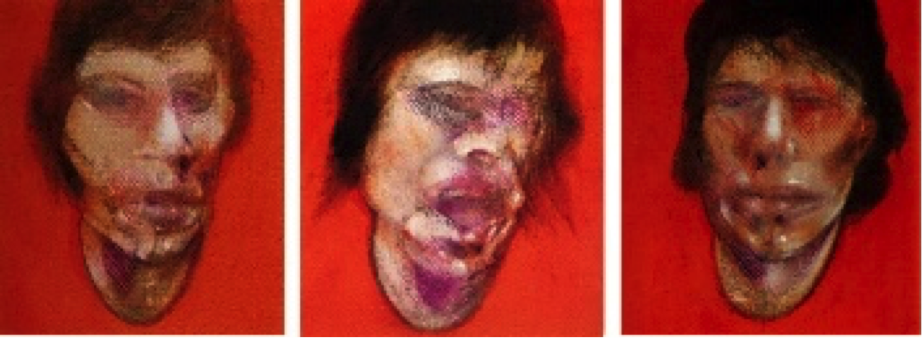
Three studies for a portrait (Mick Jagger), 1982. Francis Bacon
The global pandemic we are living through has been a time of tension, shock, worry, uncertainty, storm, haste and noise. Its management at the political, social and health levels seems to have been very improvable due to the great level of complexity it has entailed for everyone. Many things have been done, many things have been said and many things have been wrong. What we have perhaps missed is more serenity. For this reason, it would be pertinent to reflect on how we could improve the management of serenity in the healthcare world, given that this remedy is a good countervenom to the nouns that began this dissertation. 

Monday, 18 January 2021

Transitional Primary Care


Edward Coley-Jones
Head study of Perseus 1875

If even a pandemic like the current one has not been able to strengthen and improve Primary Care many wonder if anything will. And it will not be for money, given the generosity of European funds. With the devastation and the enormous burden it has assumed, it has become clear that the system has neither the capacity to adapt nor the energy to take on inexpected situations. Any increase in voltage overheats professionals who are already being pressed by high voltage. Those who attend to patients over forty every day are likely to move into the next hellish circle with ten or twenty more. 

Monday, 5 October 2020

Defend

Salvador Casado


Everyone defends something, mainly their interest. In the healthcare world in which I work, this also happens and it is very common for these interests to clash between some professional categories against others or those who think in one way against those who think the opposite. In fact, this division has been one of the main reasons for the high levels of institutional mistreatment of health professionals in our environment.

But, beyond the purely statutory, I would like to ask the following question What do I defend as a public family doctor in a rural health centre? What do you defend from your position?

Monday, 8 June 2020

The collapse of narratives


Salvador Casado


The systemic crisis that we are experiencing sets the stage for the current collapse of civilization. It is characterized by a globalization of unrest and fear that diminishes thought, reflection and understanding. We find nothing to hold on to, no leaders, no ideas, no narratives, which is allowing power to position itself behind technologies that offer rough substitutes.

Foto: @famani38
This situation of complexity affects all social areas from politics to education, from labour organisation to health. I will focus on the latter, which is the one I know best.

Monday, 11 May 2020

Primary Health Care Centres management notes


It is not the same to sail with no wind as it is to sail with a swell, it is not the same to manage a health unit in calm weather as in a pandemic. But it is useful to learn from storms because, as the sailor knows, they never come alone. 

Europe's public health systems are huge structures that could be likened to a fleet with hospitals as huge ships and Primary health centres as smaller, more agile ships. In these days of disruption with a shower of protocols from the general command but without a clear vision of what we were up against, each unit did what it could. Some maneuvered quickly, others less so; some did so skillfully, others were overtaken by circumstances.

Monday, 6 April 2020

Primary Health Care: Working in the Darkness


Working as a family doctor these days is not easy because we're walking blind. First of all we are trying to do as much work as possible over the phone to prevent patients from travelling and coming to a health facility if it can be avoided. On the other hand we do not have reliable data. Every day we receive various protocols, instructions, directives, official emails and so on in what has been a fluctuating data overload in addition to what everyone receives through their personal social networks, Whastapp groups and so on. 

Friday, 7 February 2020

Medicine, values and communication

Salvador Casado


Modern medicine has achieved a spectacular development in the last century in parallel with the rest of society. Spurred on by science and technology it has managed to overcome ambitious goals and shines proudly on the basis of its achievements. Unfortunately, there is a long shadow that contains burdens and threats. Inequalities in health, overdiagnosis and overtreatment, iatrogeny, the progressive dependence of citizens on health systems are increasingly present realities.

Illustration by Paula Alvear, from the poems Arconte Enfurecido
On the other hand, private health systems and the enormous conglomerates of pharmaceutical and technological industries based on profit seek interests that are increasingly distant from the common good. In the face of these interests, public health systems are slowly collapsing due to under-funding, cutbacks and the chronic overloading of their professionals. Everyone agrees on the complexity of managing alternatives but no one dares to implement them. Meanwhile, the public health systems are melting like butter as services are outsourced, professionals working conditions get worse or units are reconverted and closed (Public Health and others).

Friday, 4 October 2019

Is it ethical, correct and legal for a family doctor to treat 60 patients in one day?

Salvador Casado


My point of view: No, with exceptions.

Medicine is a highly regulated activity. Its exercise requires a high level of education and academic level, a high code of ethics and deontology and appropriate legislation. In other words, it cannot be exercised in any way because of the potential risk of damage for patients. 

Surprisingly, care overload is not defined, regulated or correctly managed. 

Friday, 26 April 2019

"You expect the world to adapt to your distortion"

Salvador Casado


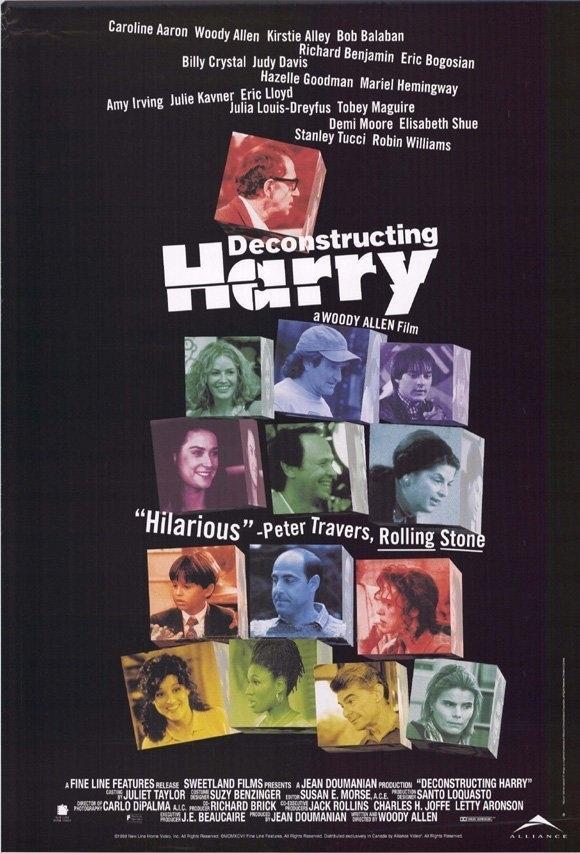
Deconstructing Harry, a film directed by Woody Allen


From time to time I like to reread the first chapters of the Martín Zurro Family Medicine Book. Review the excellent reviews of Borrell, Gené, Casajunana, de la Revilla and many others. I try to seek inspiration and encouragement, guidance and light when the confusion or complexity I face in my clinic overwhelms me. There are days or weeks when I sail the seas of uncertainty, as Juan Gérvas would say, with sufficient dignity but in others I shipwreck when the swell of my ignorance, the shortcomings of the system or the great pressure of an unbearable number of complex patients overflow me.


Wednesday, 27 February 2019

The Titanic orchestra

Salvador Casado


This week the Minister of Health convened an urgent meeting to address the problem of Spanish Primary Care which, like every winter, does not cease to accumulate headlines. Surely she had to listen to objective data that speak of the structural deterioration of the same, the progressive overload of care, the lack of resources and the delicate situation of professionals. Surely they taught her the numbers that indicate how it is increasingly difficult to find family doctors, fleeing abroad from the garbage contracts offered. The graphs indicate that in a few years a high percentage of the most veteran doctors will retire. In addition the population pyramids indicate that there will be more and more complex chronic patients...

It should not be easy to be responsible for a constitutional right such as health care when the structure of transfers of health services to the Autonomous Communities has been from the beginning an epitome of lack of coordination, political commodification and duplication of expenditure (multiplied information systems, non-centralized purchases of medicines, technology and  external services among other things). And of course, what others have not fixed, I am not going to fix...

Wednesday, 28 November 2018

Technological disruption in health

Salvador Casado


We all talk about the technological revolution being witness about how it is transforming our environment. First there were the travel agencies, then the taxis, later the tourist apartments rental, o online shopping, online education...

However, one question remains to be answered: how will health disruption affect health systems and their professionals and users?

From my point of view we can know something: the change will be progressive and will come from the successive implementation of technologies that provide advances in different aspects of clinical practice, management and organization of resources. We also know that health systems are huge organisations with high inertia and that health professionals tend to have a conservative profile when it comes to incorporating new technologies. Before we adopt them we need to have scientific evidence that is both useful and beneficial to the patient and society. The problem is that scientific evidence is costly and very slow. The average time for a new molecule to become an accepted drug is about ten years, which is unreasonable for products and services in the digital sphere.

Wednesday, 3 October 2018

Social addiction to biometrics

Salvador Casado


Mirrors are polished surfaces that reflect the image projected on them.  It is a technology that the ancient Egyptians and Greeks already knew and that has evolved over time. Today the majority of the population carries a pocket mirror that also allows immortalizing the images that come to it in the form of an auto-photo. In addition, modern mirrors reflect multiple variables and information of their owner. They measure his steps and the distance he travels, his activity pattern, his movements, his level of communication. They can measure the sleep/wakefulness rhythm and give a report on the quality of sleep and if we connect some specific gadget they can measure blood pressure, blood sugar and even do an electrocardiogram.

Wednesday, 30 May 2018

In the rescue of health leaders and health guides

Salvador Casado


In the area of public health, where I have been working for a long time, we have suffered a profound crisis of leadership. Although all positions of responsibility are well filled and more and more management positions are being designed, paradoxically it is rare to find managers or professionals who lead teams towards specific objectives or missions that open new paths.

The usual path is the protocol, not to get out of the established, to avoid changes and innovation and not to leave the office or the consultation to skip hazards.

This attitude in management staff is being imitated by ordinary professionals who follow their instructions. The overload of care and institutional neglect cause family doctors to barely leave their offices to implement some community activities, nurses and social workers the same and in hospitals everything is considered within the service interacting as little as possible with primary care services or other agents.

Wednesday, 25 April 2018

Weapons of mass distraction in the National Health System

Salvador Casado


When we go to a health professional's office there are recurring constants, white coats, stretchers, blood pressure monitors and a computer on the table. The medical record is no longer a folder full of paperwork, but an electronic form on which health professionals work. There is no doubt that it has many advantages over the previous format but it has not yet been able to correct its major flaw: its great power of distraction of the professional who uses it.

The limitations of design and usability mean that at each clinical meeting a considerable amount of time has to be devoted to registering, filling in numerous protocols and making requests for analyses, consultations to other professionals or issuing prescription, bureaucracy  or reports of any kind.  The perception of many patients is that health professionals look at their screens more than they do at themselves, and that's usually not cool.  Nor is it a dish  for nurses and doctors who see how their limited time is spent on tasks that prevent them from devoting dignified attention to the people they attend.

Wednesday, 7 March 2018

Is it possible to design a health system without a narrative basis?


Salvador Casado


One of the most complex issues in health organizations is to design structures and processes that combine quality, effectiveness and user satisfaction. So far no one has found the holy grail of “the good, beautiful and cheap” in healing. Where I would like us to pause for a moment is in the analysis of the founding fact of any health system: the clinical act. The point of contact between patients and health professionals is the clinical meeting that will lead to a therapeutic relationship.

The problem is that nowadays this is very expensive and at the moment nobody dares to automate it using technology, algorithms or artificial intelligence. When you're sick, you want someone to treat you, not a robot.