Showing posts with label Primary Care. Show all posts

Monday, 19 September 2022

How to get the most out of virtual primary care?

José Cerezo


From the onset, the pandemic has acted as a powerful catalyst, accelerating the introduction of reforms and the experimentation with new models of care, many of which had long been simmering in the labs of European health systems. These transformations have quickly and deeply affected primary care due to the indispensable – and little recognized – role it has played during the pandemic.

Primary care, on many occasions in a chronic context of precariousness and lack of resources, has played a dual role: diagnosing and monitoring COVID-19 patients who did not require hospitalization (the vast majority) and maintaining the rest of the essential services, being of special importance the follow-up of patients with chronic diseases and non-delayable and urgent cases. Among these transformations, the most radical was the overnight change in the conditions of access to primary care services. In a matter of weeks, primary care went from being fundamentally face-to-face to being almost exclusively virtual with the aim to preventing infections in health centres and protecting both patients and health professionals.

Virtual primary care is here to stay

The combination of various modes of provision of primary care services is a reality. These include face-to-face visits, both in health centres and in homes or community activities; face-to-face visits by mobile teams, especially in rural settings; and virtual visits (online appointment systems, telephone consultations, videoconferences, SMS, emails). All of them constitute a fundamental feature of primary care for the present and the future.

For this reason, and after more than two years of the pandemic, it is more important than ever to analyze international experiences to ensure that virtual primary care contributes to reducing inequalities in access to primary care services and to improving its quality.

This is the intention of an outstanding report published earlier this year by the Nuffield Trust and written by Dr Charlotte Paddison and Isabelle McGill entitled "Digital primary care: Improving access for all?". The authors carried out a quick review of the national (United Kingdom) and international evidence published during the years 2020 and 2021, which yields a series of important messages, which are highlighted below.

First, patients with the least need for health care, young people and people of high socioeconomic status are the most likely to benefit from virtual access to primary care. This constitutes a new form of the "inverse care law" and can enhance health inequalities since those groups that have worse health and greater health needs (people with socio-economic vulnerability, ethnic minorities and people with cognitive or communication difficulties) can see their access negatively affected. Regarding Catalonia, a recently published study concluded that remote consultations tripled during the first three months of the pandemic. Most users were predominantly female, systematically younger, more actively employed, and with less complex pathologies. This helped mitigate, to some extent, the decline in face-to-face visits in younger age groups, but also suggests that profiles with greater clinical and social complexity benefit less from non-face-to-face visits.

Secondly, virtual primary care may lead to the replacement of some access barriers (distance, time, transport problems) by others (internet access, digital skills, device capacity). The report includes an staggering fact about the United Kingdom: almost two million people do not have access to the internet and cannot afford it, so they are automatically excluded from online care.

However, the review also shows optimistic results. In situations where digital tools improve the accessibility of primary care, such tools can lead to improvements not only in access but also in the quality of care. Choosing between different consultation modalities can benefit patients who were previously disadvantaged in face-to-face primary care in two ways: by overcoming geographic barriers to access and by promoting patient autonomy. Particularly in the field of mental health, evidence shows that remote consultations increase the contact time that these patients can have with their primary care provider, in addition to expanding the scope of programs run by specialized mental health services.

Three recommendations to overcome the digital divide

The report also points out a series of recommendations for decision-makers interested in getting the most out of digital tools in primary care, while also addressing inequalities in access.

  • Commit to the right goal: to ensure that all citizens can access primary care under equal conditions.
  • Asses the impact that the change in access conditions may have on different groups of patients and clearly, identify potential “winners and losers”.
  • Introduce virtual primary care, so that it never reduces the possibilities of access but rather contributes to increasing and personalizing them based on the individual characteristics of each patient and the dynamics of use by different groups. In this sense, studies such as the one cited above from Catalonia, which characterize the profiles that most actively use teleconsultation and other virtual care tools, are essential.

In this process, primary care professionals must play a fundamental role in three areas: understanding the needs of their population, addressing access barriers by co-designing inclusive access to clinical circuits, and ensuring that access modalities are customised appropriately.

Virtuality must be a means to reduce inequalities and increase the quality

Although not mentioned in the report, it is vitally important for policymakers to study the context in which primary care services operate, before jumping into the introduction of digital solutions. Virtual primary care should never be seen as an alternative to strengthening primary care with sufficient human resources. In addition, there is a sort of magical thinking about the time that digital tools and telematic care can save health professionals. This can end up overloading, even more, the workload of primary care professionals  that isin a state of chronic unsustainability in many European countries. In Spain, the expansion of the use of remote care not only did not decrease but rather increased the work of primary care professionals. For example, since September 2020, the increase in e-consultations has not been associated with a decrease in face-to-face consultations. This increases the total number of consultations and the workload of PC professionals by adding telematic attention to the face-to-face consultations already existing. In addition, increased accessibility often goes hand in hand with increased demand, which in turn requires increased triage and demand management efforts (and resources) to prevent delays in the attention of the most relevant problems. Finally, the digital skills of professionals must be at the centre of any virtual care development strategy.

Virtual primary care should never be an end in itself, but rather a means to a greater purpose: to reduce inequalities in access to the health system and improve the quality of service provision.

José Cerezo Cerezo is health policy analyst and works as a consultant for the WHO European Center for Primary Health Care and the WHO Barcelona Office for the Financing of Health Systems.

Monday, 27 June 2022

#FAP_ICSCC Primary care pharmacists, support for patient-centred care

Josep Vidal-Alaball


For writing this post, Josep Vidal-Alaball has shared authorship with Anna Maria Bonet Esteve and Aïna Fuster Casanovas.

Health systems have always been more disease-oriented than patient-oriented. In a paternalistic way, the patient's medication has been managed, indicating what he or she has to take and how they have to do it. What consequences has this had? Discomfort in those patients for whom the medication does not suit them, with the consequent interruption of the treatment and the frustration of the professionals for not obtaining results, in addition to the high cost associated with the health system. The social profile of the Catalan population is characterized by progressive ageing and, therefore, by an increase in chronic pathology and associated comorbidities. Fragmented health care among multiple health providers in the system can complicate treatments that are already complex per se. In a context of excessive medicalization of daily life due to the use of medication as one of the main therapeutic resources in the provision of health care, there is an acute need to change the paternalistic management model to promote care that takes into account all stakeholders (1)(2).

Monday, 16 May 2022

Team stuck? The three factors to drive change successfully

Pere Vivó


Let's see if you recognize this situation: endless care agendas full of telephone visits that do not add value, repeated requests that do not follow a scheduling logic or a reasonable priority, few and highly complex face-to-face visits that take up more time than expected, tense situations with some patients and, finally, ending the day with a bitter feeling that the work is pending or poorly resolved...

If the answer is yes, you are in luck because your organization will need deep changes that can be an opportunity for transformation and collective motivation.

Monday, 17 January 2022

Cross-functional units, a challenge within reach

Jordi Varela
Editor


In 2003, a study led by Chris Ham observed that for eleven clinical situations related to chronicity and age, the NHS allocated up to three and a half times more hospital beds than Kaiser Permanente. This was such a surprising result that it generated great admiration for the European health managers by the Californian insurer, especially considering that, according to the researchers themselves, the success of KP lies in the transversal integration of its services, the promotion of self-care, the active role of community nurses and the involvement of physicians to achieve maximum resolution of problems in the framework of primary care.

Monday, 10 January 2022

Time in the gaze

Soledad Delgado


I often find myself intensely focused on the keyboard, pounding the keys quickly so as not to leave any detail out, striving to relay a very complete medical history - many times so complete that several chapters of a book could be written on subjects as trivial as a simple toothache. Speeding up to the last paragraph all the while noticing the ongoing growth of the patients’ list.

Monday, 3 January 2022

The risks of doing the wrong things

José Joaquín Mira


The New Yorker
In all disciplines, we find some questions in search of an answer that stands out above all other questions, but without finding an adequate solution. The correct treatment, for the right person and at the right time (therapeutic adequacy), is one of those holy grails that affect, in this case, health disciplines.

Monday, 27 December 2021

Doctor, give me a checkup and make it a full one.

Xavier Bayona


The need to reduce anxiety due to the uncertainty of the possibility of getting sick and dying is one of the most frequent reasons behind the demand for a "preventive" health study, popularly known as a checkup. The purpose of the checkup is to detect the disease early, prevent it from developing, and/or provide reassurance. General health studies (checkups) involve multiple tests on a person who doesn't feel ill and is a common element of medical care in the Western world.

Monday, 13 December 2021

Is there an ideal primary care team?

Jordi Varela
Editor


Have we ever heard that there are health centres in Finland that work as a multidisciplinary team, or that in Alaska there are groups of professionals who do admirable work with indigenous community health, or that in Scotland health and social services already they work in a very integrated way? And the question that comes to mind is: does the ideal primary care team exist?

Monday, 15 November 2021

Why is the integration of services not encouraged?

Jordi Varela
Editor


@varelalaf

Health and social services are fragmented between various institutions, levels of care and a lot of specialities and each one of the fractions of the system provides a service that makes sense in itself, such as a three-hour weekly service of a family worker for lending a hand at the home of an elderly person who lives alone, or angioplasty intervention for a woman who has just suffered a myocardial infarction and, according to this system, funders pay differently for each activity.

Monday, 8 November 2021

A new recipe for teamwork in primary care

Jordi Varela
Editor


Primary care teams in Spain are under pressure from the schedules of daily visits, which sends multidisciplinary teamwork to the background. To understand each other, the sessions are held whenever possible and the level of attendance and participation is often irregular, given that nothing encourages them. The core aspect of a primary care centre today is that each doctor and each nurse is assigned a contingent of citizens -presumed to be patients-, who, when requested, must be attended to as soon as possible.

Monday, 13 September 2021

Caring for complex patients in the community requires a radical change

Jordi Varela


The pandemic has highlighted the need to protect, even more, if possible, people suffering from clinical complexities and some of them, in addition, family, economic or social difficulties. For this reason, some primary care centres have set up nursing teams to more proactively care for the most vulnerable patients. These groups of nurses have taken the initiative and now organize their tasks, most of them at home, in an autonomous way, according to a fine balance between coordination and effectiveness. The historical medical-nurse binomial of primary care, then, is beginning to show cracks that give way to advanced organizational models with more nursing skills.

Monday, 16 August 2021

Remote visits, are they always the best option?

Glòria Galvez


By Healthwatch Dorset 
The coronavirus pandemic has had an explosive and profound impact on health care systems, especially concerning traditional care. Presently, in addition to caring for patients affected by a coronavirus, it’s necessary to continue caring for the "invisible patient", who is still there, affected by other pathologies evolving at their usual pace, some of them potentially severe. Remote visits, which in a short time has gone from being a rare modality to being the usual form of interaction with the patient, are presented as the best option to carry out their follow-up, thus avoiding crowded waiting rooms and the risk of infection.

Monday, 9 August 2021

Primary care gaps: what's failing and how can we fix it?

Pere Vivó


The health crisis is placing unprecedented strain on the health care system and in particular on primary care. Saturated agendas, disorganized demand and forced abandonment of some functions to assume new competencies, all added to the social crisis and the extra demand on the part of some users have as a result a generalized discouragement and psychological exhaustion of professionals.

Monday, 26 July 2021

What have we learned in Primary Care during the pandemic?

Salvador Casado


Illustration @72kilos

1. Prioritise. 
2. Team and patient safety. 
3. Self-organisation. 
4. Coordination with the community, society and NHS. 
5. Resilience. Fatigue management.

The Covid19 pandemic has been one of the hardest tests both for the health system as an institution and for its professionals. From a rural health centre, it seemed important to me to open a reflection within the team on what we had learnt in Primary Care over these months. I share the ideas that emerged from this process, which was carried out in a non-systematic way in small group or corridor conversations. The experience of a team is not exclusive to it, nor does it end with it; it is undoubtedly shared with many other professionals and is likely to be enriched by that of other groups with other socio-demographic circumstances, or from other areas of hospital or mental health organisation. The intention of this paper is none other than to extend this reflection and allow the reader to add to it in the form of a commentary on the text or on social networks (twitter: @doctorCasado).

Monday, 28 June 2021

The pandemic and the agony of primary care

Andreu Segura


I thank Xavier Blancafort for the photograph, as well as 
his suggestions, I also thank Laia Riera and Vicente Giner.

COVID-19 has been a real stress test for Spanish health system as a whole, especially for primary care services (PC) ‒particularly in the most advanced phases of the pandemic‒ and public health facilities (SP) in general, although these are rarely the object of evaluation, although we have all paid for their limitations and deficiencies. For some time now, both levels of the national health system have been languishing as illustrated - although, in my opinion, this is not the worst - the continued decline in the proportion of the public health budget that corresponds to them, especially in the SP, which does not reach 2% of the total. Of course, the proportion of spending is not a sufficiently precise indicator of the efficiency neither of the efforts nor the value that its activity contributes to improving and maintaining the population health. That is why I consider the absence of health strategies more serious and, even worse, healthy public policies, since the appeals to health in all policies have been above all rhetorical. Healthy public policies should naturally include health policy, so that it could effectively contribute to the collective promotion and protection of community health, as one more element along with educational, labour, urban, economic policy, etc.

Monday, 21 June 2021

More primary care, a disruptive innovation

Jordi Varela
Editor


One of the bad news that 2020 brought has been Clayton Christensen's death, a Harvard Business School professor who developed the theory of disruptive innovation and who already deserved the care of our blog with the commentary on the book The Innovator's Prescription, where the author analyzes the reasons why healthcare systems are so refractory to innovation. As I believe that the effort that Christensen has made to adapt his theory of innovation to healthcare is worth it, as a tribute, I have recovered a video of a lecture he gave at King's Fund in 2013.

Monday, 24 May 2021

Serenity Management

Salvador Casado


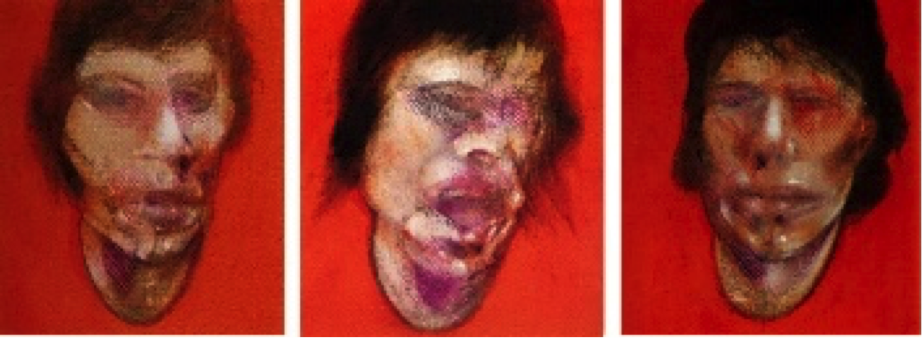
Three studies for a portrait (Mick Jagger), 1982. Francis Bacon
The global pandemic we are living through has been a time of tension, shock, worry, uncertainty, storm, haste and noise. Its management at the political, social and health levels seems to have been very improvable due to the great level of complexity it has entailed for everyone. Many things have been done, many things have been said and many things have been wrong. What we have perhaps missed is more serenity. For this reason, it would be pertinent to reflect on how we could improve the management of serenity in the healthcare world, given that this remedy is a good countervenom to the nouns that began this dissertation. 

Monday, 19 April 2021

The home as a centre for health and social care operations

Jordi Varela
Editor


@varelalaf
People, while enjoying independence, receive health care services in accreditated facilities, where professionals work in an appropriate environment and they manage everything that influences the quality of their work: noise, lights, computers, clinical devices, waiting rooms, etc. On the contrary, when people become dependents, their home takes centre stage. It is, however, an alien place for professionals, often with difficult access and full of unforeseen events. The point is that many doctors and nurses prefer not to have to step out of their comfort zone and, probably, for this reason, home care programs weaken whenever there are budget constraints or overly packed schedules.

Monday, 5 April 2021

Four premises to arrive at the autonomous organization of your team

Pere Vivó


Lack of agility, rigidity, slowness, excess of indicators, contradictory orders, ineffectiveness... are some of the historical and structural pathologies of the health care system, as Salvador Casado pointed out in the post "Primary Health Care Centres management notes".

Monday, 22 March 2021

Hospital outpatient department, the great mess

Jordi Varela
Editor


Hospital day services don’t stop growing to the detriment of traditional hospitalizations, to the extent that the NHS has estimated that, in England, patient movements to hospitals generate 5% of road traffic throughout the country. Many of these services, such as surgery without admission, chemotherapy, anticoagulants or endoscopies, have been very well outlined since their origin, external consultations in general, on the other hand, are multipurpose devices where each speciality has accumulated outpatient services of very different characteristics until they become overflowing spaces that are difficult to manage, precisely because they have not defined what is expected of each of their activities. To give an example, a rheumatologist told me that it was unfortunate that they were evaluated due to the relationship between first and subsequent visits, when it’s known that his patients are complex forever, and he suggested that it would be convenient to be able to assess their service based on the quality of life their patients get, about the costs of prescribed treatments.