Showing posts with label Management models. Show all posts

Monday, 19 September 2022

How to get the most out of virtual primary care?

José Cerezo


From the onset, the pandemic has acted as a powerful catalyst, accelerating the introduction of reforms and the experimentation with new models of care, many of which had long been simmering in the labs of European health systems. These transformations have quickly and deeply affected primary care due to the indispensable – and little recognized – role it has played during the pandemic.

Primary care, on many occasions in a chronic context of precariousness and lack of resources, has played a dual role: diagnosing and monitoring COVID-19 patients who did not require hospitalization (the vast majority) and maintaining the rest of the essential services, being of special importance the follow-up of patients with chronic diseases and non-delayable and urgent cases. Among these transformations, the most radical was the overnight change in the conditions of access to primary care services. In a matter of weeks, primary care went from being fundamentally face-to-face to being almost exclusively virtual with the aim to preventing infections in health centres and protecting both patients and health professionals.

Virtual primary care is here to stay

The combination of various modes of provision of primary care services is a reality. These include face-to-face visits, both in health centres and in homes or community activities; face-to-face visits by mobile teams, especially in rural settings; and virtual visits (online appointment systems, telephone consultations, videoconferences, SMS, emails). All of them constitute a fundamental feature of primary care for the present and the future.

For this reason, and after more than two years of the pandemic, it is more important than ever to analyze international experiences to ensure that virtual primary care contributes to reducing inequalities in access to primary care services and to improving its quality.

This is the intention of an outstanding report published earlier this year by the Nuffield Trust and written by Dr Charlotte Paddison and Isabelle McGill entitled "Digital primary care: Improving access for all?". The authors carried out a quick review of the national (United Kingdom) and international evidence published during the years 2020 and 2021, which yields a series of important messages, which are highlighted below.

First, patients with the least need for health care, young people and people of high socioeconomic status are the most likely to benefit from virtual access to primary care. This constitutes a new form of the "inverse care law" and can enhance health inequalities since those groups that have worse health and greater health needs (people with socio-economic vulnerability, ethnic minorities and people with cognitive or communication difficulties) can see their access negatively affected. Regarding Catalonia, a recently published study concluded that remote consultations tripled during the first three months of the pandemic. Most users were predominantly female, systematically younger, more actively employed, and with less complex pathologies. This helped mitigate, to some extent, the decline in face-to-face visits in younger age groups, but also suggests that profiles with greater clinical and social complexity benefit less from non-face-to-face visits.

Secondly, virtual primary care may lead to the replacement of some access barriers (distance, time, transport problems) by others (internet access, digital skills, device capacity). The report includes an staggering fact about the United Kingdom: almost two million people do not have access to the internet and cannot afford it, so they are automatically excluded from online care.

However, the review also shows optimistic results. In situations where digital tools improve the accessibility of primary care, such tools can lead to improvements not only in access but also in the quality of care. Choosing between different consultation modalities can benefit patients who were previously disadvantaged in face-to-face primary care in two ways: by overcoming geographic barriers to access and by promoting patient autonomy. Particularly in the field of mental health, evidence shows that remote consultations increase the contact time that these patients can have with their primary care provider, in addition to expanding the scope of programs run by specialized mental health services.

Three recommendations to overcome the digital divide

The report also points out a series of recommendations for decision-makers interested in getting the most out of digital tools in primary care, while also addressing inequalities in access.

  • Commit to the right goal: to ensure that all citizens can access primary care under equal conditions.
  • Asses the impact that the change in access conditions may have on different groups of patients and clearly, identify potential “winners and losers”.
  • Introduce virtual primary care, so that it never reduces the possibilities of access but rather contributes to increasing and personalizing them based on the individual characteristics of each patient and the dynamics of use by different groups. In this sense, studies such as the one cited above from Catalonia, which characterize the profiles that most actively use teleconsultation and other virtual care tools, are essential.

In this process, primary care professionals must play a fundamental role in three areas: understanding the needs of their population, addressing access barriers by co-designing inclusive access to clinical circuits, and ensuring that access modalities are customised appropriately.

Virtuality must be a means to reduce inequalities and increase the quality

Although not mentioned in the report, it is vitally important for policymakers to study the context in which primary care services operate, before jumping into the introduction of digital solutions. Virtual primary care should never be seen as an alternative to strengthening primary care with sufficient human resources. In addition, there is a sort of magical thinking about the time that digital tools and telematic care can save health professionals. This can end up overloading, even more, the workload of primary care professionals  that isin a state of chronic unsustainability in many European countries. In Spain, the expansion of the use of remote care not only did not decrease but rather increased the work of primary care professionals. For example, since September 2020, the increase in e-consultations has not been associated with a decrease in face-to-face consultations. This increases the total number of consultations and the workload of PC professionals by adding telematic attention to the face-to-face consultations already existing. In addition, increased accessibility often goes hand in hand with increased demand, which in turn requires increased triage and demand management efforts (and resources) to prevent delays in the attention of the most relevant problems. Finally, the digital skills of professionals must be at the centre of any virtual care development strategy.

Virtual primary care should never be an end in itself, but rather a means to a greater purpose: to reduce inequalities in access to the health system and improve the quality of service provision.

José Cerezo Cerezo is health policy analyst and works as a consultant for the WHO European Center for Primary Health Care and the WHO Barcelona Office for the Financing of Health Systems.

Monday, 29 August 2022

Ten attributes of future healthcare according to McKinsey

Tino Martí


In late March, McKinsey published "The next frontier of care delivery in healthcare," an analysis of the trends that will define healthcare delivery in the United States in the coming years, drawn from expert input and led by Shubham Singhal, Mathangi Radha, and Nithya Vinjamoori.

According to McKinsey, there are ten attributes of future health care, defined below and displayed in the accompanying infographic:
  1. Patient-centred: this attribute brings together various aspects such as a holistic and personalized vision, accessibility to health services and data, the use of wellness services and user satisfaction.
  2. Virtual: the pandemic has triggered the use of remote health and has predisposed providers and patients to new models of care that combine virtual care with face-to-face care in services such as urgent care, scheduled consultation, home care or medication administration at home.
  3. Ambulatory: care provided in health centres represents a third of the activity invoiced in the United States. Outpatient care is associated with shorter waiting and visit times and lower complication rates.
  4. Home care: care provided at home expands to new models such as home dialysis or home hospitalization. The combination of the above attributes allows the redefinition of care processes.
  5. Based on value and risk-taking: the expectation of growth in value-based contracts in the coming years is associated with the prevention orientation of services and the role of primary care.
  6. Driven by data and technology: digital health and the use of data for decision-making and personalization of care can change the trend of healthcare costs, improve productivity and facilitate the deployment of value-based healthcare.
  7. Transparent and interoperable: new regulations force the publication of rates, restrict the blocking of data between providers and facilitate access to health data.
  8. Facilitated by new medical technologies: self-service opportunities for the management of chronic pathologies, remote monitoring, home telemetry or robotics are examples of technologies applied to the transformation of care models that include outpatient, home and virtual care.
  9. Financed by private investors: Private investment in healthcare is growing significantly and is geared towards new models of care that take advantage of the trends described above to overhaul the patient experience.
  10. Integrated despite being fragmented: the integration of care is based on the coordination of ecosystem agents through technological platforms.

Despite being predictions based on and directed to the United States healthcare sector, most of the attributes described are directly applicable to our European context with certain nuances. It‘s worth retaining as positive the consolidation of new models of care around the needs of the person, the value of care and the possibilities of de-concentration provided by technologies and data. The centrifugal trend toward more ambulatory, home and virtual care draws a substantial paradigm shift in the provision of services with deep consequences on how these services should be purchased, managed and provided. This new constellation leads to prevention and care but requires fundamental changes in the messages that are transferred to health providers.

In the "difficult to transfer" chapter, the increase in private investment in the health sector arouses opposing sentiments. On the one hand, the social centrality of health caused by the pandemic and shaken by technological innovation offers the opportunity to join forces to improve, from within and from outside, systems with a tendency to immobility. On the other hand, the expectation of suggestive returns on investment – explains the investors' interest and can aggravate existing inequalities.

Everything indicates that guiding the future of health care through these consolidated trends will be a challenge full of balances and compromises between the necessary change and the undesirable consequences that will require decision-makers to have a sophisticated compass.

Monday, 4 July 2022

10 proposals to transform our hospitals

Nacho Vallejo


The history of the NASA pirate group

In the 1980s, the space agency NASA began work on the development of space shuttles. Responsible for landing man on the Moon, it zealously maintained the use of the Apollo-era operating system. At that time, a group of young engineers who had recently joined the agency questioned whether the system was going to be able to respond to the challenges posed. Calling themselves "the Nasa pirates", they proposed an alternative mission control. The agency's mantra "we've always done it this way, so it must be the best" didn't stop these rebels from writing their own "manifesto" challenging the status quo.

Monday, 27 June 2022

#FAP_ICSCC Primary care pharmacists, support for patient-centred care

Josep Vidal-Alaball


For writing this post, Josep Vidal-Alaball has shared authorship with Anna Maria Bonet Esteve and Aïna Fuster Casanovas.

Health systems have always been more disease-oriented than patient-oriented. In a paternalistic way, the patient's medication has been managed, indicating what he or she has to take and how they have to do it. What consequences has this had? Discomfort in those patients for whom the medication does not suit them, with the consequent interruption of the treatment and the frustration of the professionals for not obtaining results, in addition to the high cost associated with the health system. The social profile of the Catalan population is characterized by progressive ageing and, therefore, by an increase in chronic pathology and associated comorbidities. Fragmented health care among multiple health providers in the system can complicate treatments that are already complex per se. In a context of excessive medicalization of daily life due to the use of medication as one of the main therapeutic resources in the provision of health care, there is an acute need to change the paternalistic management model to promote care that takes into account all stakeholders (1)(2).

Monday, 16 May 2022

Team stuck? The three factors to drive change successfully

Pere Vivó


Let's see if you recognize this situation: endless care agendas full of telephone visits that do not add value, repeated requests that do not follow a scheduling logic or a reasonable priority, few and highly complex face-to-face visits that take up more time than expected, tense situations with some patients and, finally, ending the day with a bitter feeling that the work is pending or poorly resolved...

If the answer is yes, you are in luck because your organization will need deep changes that can be an opportunity for transformation and collective motivation.

Monday, 4 April 2022

Transforming our health system requires continuity and coherence

Nacho Vallejo
Atenció integral 


Photo of Alexas. Photos in Pexels
Transforming health care requires continuity and consistency.” This is the title of a Harvard Business Review article written by Mark Britnell. Dr. Britnell is an executive of KPMG International and a global health systems expert. He dedicated his professional life to this field and has worked in more than 80 countries, a circumstance that has allowed him to gain first-hand unique experience of healthcare models. In 2000 he was appointed chief executive of University Hospitals Birmingham NHS Foundation Trust where he was responsible for the design of the largest NHS hospital. He is also the author of the book In Search of the Perfect Health System.

Monday, 21 March 2022

Medical services, an anachronism

Jordi Varela
Editor


@varelalaf

Clayton Christensen says that if you want to be efficient, you have to offer services as close as possible to where the need arises. Michael Porter and Thomas Lee, for their part, defend the creation of Integrated Practice Units (IPU), while those of Corporate Rebels affirm that attractive projects are made because of the commitment of professionals and not because of the hierarchical command structure. This post is contrary to the status quo of hospital organization charts and, for this reason, I have chosen these three references that, from various perspectives, direct us against centralism, corporatism, and the hierarchy that current medical services give off, anchored in a vision more typical of the last century than of the demanding complexity of today's health problems.

Monday, 14 March 2022

Improving organizations' culture; avoiding inertia

Nacho Vallejo


Image of Sasin Tipchai a Pixabay

The culture of a healthcare organization is still an abstract concept. It aims to incorporate unwritten rules, beliefs, or values workers share. It's the personality of the organization and, in institutions such as hospitals, it can even be different between services or professional categories, it can be linked to the baroque nature of our hierarchies and, above all, to the traditional one: "Here it has always been done that way."

Monday, 28 February 2022

The hierarchical model, a burden

Jordi Varela


The current hierarchical model is slowing the good progress of companies and, to support this statement, I will stick to the evidence, through two different sources, one Japanese-Dutch, the iceberg of ignorance, and the other English, the cost of silence.

The iceberg of ignorance

In 1989, a consultant, Sydney Yoshida, carried out a study (reported in a Corporate Rebels post), for Casonic, a Japanese car company, and found that the real problems of the production lines, known by 100% of the operators, are captured by 74% of the team leaders, but only by 9% of the intermediate managers and by a scant 4% of the executive directors, who end up making the budgetary and investment decisions of the production chain. This surprising phenomenon of isolation and impoverishment of organizations was called the iceberg of ignorance

Monday, 13 December 2021

Is there an ideal primary care team?

Jordi Varela
Editor


Have we ever heard that there are health centres in Finland that work as a multidisciplinary team, or that in Alaska there are groups of professionals who do admirable work with indigenous community health, or that in Scotland health and social services already they work in a very integrated way? And the question that comes to mind is: does the ideal primary care team exist?

Monday, 15 November 2021

Why is the integration of services not encouraged?

Jordi Varela
Editor


@varelalaf

Health and social services are fragmented between various institutions, levels of care and a lot of specialities and each one of the fractions of the system provides a service that makes sense in itself, such as a three-hour weekly service of a family worker for lending a hand at the home of an elderly person who lives alone, or angioplasty intervention for a woman who has just suffered a myocardial infarction and, according to this system, funders pay differently for each activity.

Monday, 8 November 2021

A new recipe for teamwork in primary care

Jordi Varela
Editor


Primary care teams in Spain are under pressure from the schedules of daily visits, which sends multidisciplinary teamwork to the background. To understand each other, the sessions are held whenever possible and the level of attendance and participation is often irregular, given that nothing encourages them. The core aspect of a primary care centre today is that each doctor and each nurse is assigned a contingent of citizens -presumed to be patients-, who, when requested, must be attended to as soon as possible.

Monday, 4 October 2021

The pandemic of medical errors

Salvador Casado


George Ștefănescu - Cosmos, 1992
The death of a young person from undiagnosed cancer often comes as a shock to those around them. In recent weeks there has been a lot of controversy on social networks following the death of the journalist Olatz Vazquez, who documented her illness to the end with photos, which has encouraged me to reflect on medical error, to be self-critical of my own and to try to make proposals from a broad vision that includes all the actors. The Sarscov2 pandemic has caused another pandemic of unavoidable medical errors both by action and, above all, by omission, because the collapse of health systems around the world has caused them to stop attending sufficiently to other pathologies for many months. In the following text I approach the subject from the point of view of a healthcare professional who tries to explain it to his patients and colleagues and not from a technical approach, for which I provide a list of suggestions for further reading at the end.

Monday, 26 July 2021

What have we learned in Primary Care during the pandemic?

Salvador Casado


Illustration @72kilos

1. Prioritise. 
2. Team and patient safety. 
3. Self-organisation. 
4. Coordination with the community, society and NHS. 
5. Resilience. Fatigue management.

The Covid19 pandemic has been one of the hardest tests both for the health system as an institution and for its professionals. From a rural health centre, it seemed important to me to open a reflection within the team on what we had learnt in Primary Care over these months. I share the ideas that emerged from this process, which was carried out in a non-systematic way in small group or corridor conversations. The experience of a team is not exclusive to it, nor does it end with it; it is undoubtedly shared with many other professionals and is likely to be enriched by that of other groups with other socio-demographic circumstances, or from other areas of hospital or mental health organisation. The intention of this paper is none other than to extend this reflection and allow the reader to add to it in the form of a commentary on the text or on social networks (twitter: @doctorCasado).

Monday, 19 July 2021

Parallels between pandemics and the bystander effect

Cristina Roure


I remember how, just a few weeks before the declaration of the state of alarm, we looked first at China and later at Italy with astonishment and disbelief, as if what was happening there was not with us, as mere spectators. Perhaps we thought that borders could protect us, or at least give us time to anticipate and do better than the Chinese or the Italians. When we took action, our still fresh health contingency plans were pulverized in less than 48 hours by a tsunami that drove us straight to the ground of improvisation.

Monday, 5 July 2021

Rebellion in companies: it's time for professionals

Jordi Varela
Editor


Joost Minnaar and Pim de Morree, in the book they have just published, Corporate Rebels, make work more fun, explain that, in the summer of 2015, having a beer on a terrace in Barcelona, they decided they were tired of being treated like children in the companies where they worked. They hung up their habits and set out to travel to see how the companies that had opted to rely more on the capabilities of their workers than on process control worked. As a result of the inspiring Barcelona beer, they not only left their jobs but also created a blog, Corporate Rebels, and generated a list of innovative companies, both from an organizational and labour point of view. That said, do not assume that the initiatory journey of the two young Dutchmen is about promoting start-ups, but about how companies can be transformed from below.

Monday, 21 June 2021

More primary care, a disruptive innovation

Jordi Varela
Editor


One of the bad news that 2020 brought has been Clayton Christensen's death, a Harvard Business School professor who developed the theory of disruptive innovation and who already deserved the care of our blog with the commentary on the book The Innovator's Prescription, where the author analyzes the reasons why healthcare systems are so refractory to innovation. As I believe that the effort that Christensen has made to adapt his theory of innovation to healthcare is worth it, as a tribute, I have recovered a video of a lecture he gave at King's Fund in 2013.

Monday, 14 June 2021

Do we really want to change things? About Kotter’s 8 steps

Jordi Varela
Editor


Our iceberg is Melting is a fable that illustrates very well that detecting problems is not the same as wanting to fix them. Fred, an observant penguin, realizes that his iceberg is cracking, a matter that will be catastrophic for the entire colony living obliviously to the problem. The author, John Kotter uses the fable to unravel the 8 steps that any individual, in Fred's circumstances, should follow if they want to save the penguin colony:

Monday, 24 May 2021

Serenity Management

Salvador Casado


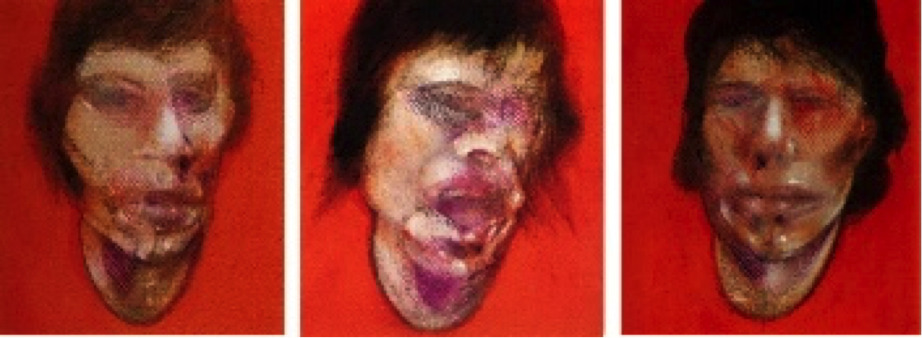
Three studies for a portrait (Mick Jagger), 1982. Francis Bacon
The global pandemic we are living through has been a time of tension, shock, worry, uncertainty, storm, haste and noise. Its management at the political, social and health levels seems to have been very improvable due to the great level of complexity it has entailed for everyone. Many things have been done, many things have been said and many things have been wrong. What we have perhaps missed is more serenity. For this reason, it would be pertinent to reflect on how we could improve the management of serenity in the healthcare world, given that this remedy is a good countervenom to the nouns that began this dissertation. 

Monday, 5 April 2021

Four premises to arrive at the autonomous organization of your team

Pere Vivó


Lack of agility, rigidity, slowness, excess of indicators, contradictory orders, ineffectiveness... are some of the historical and structural pathologies of the health care system, as Salvador Casado pointed out in the post "Primary Health Care Centres management notes".