Showing posts with label Inzitari M.. Show all posts

Monday, 18 April 2022

Digital health: about the inequality of the elderly

Marco Inzitari


"The prioritization of care for COVID-19 changed the doctor-patient relationship reducing scheduled face-to-face visits for the detection and monitoring of chronic diseases, of almost 41%. To return to pre-pandemic levels of diagnosis and management of chronic diseases, primary health care services would have to reorganize themselves and carry out specific actions for the groups at greatest risk. I quote verbatim an interesting recent article by the group of Dr. Antoni Sisó, current president of the Catalan Society of Family and Community Medicine (CAMFiC) and an outstanding researcher.

Monday, 22 November 2021

Humanism and literature in every area of healthcare

Marco Inzitari


Oliver Sack
Luckily, the person is regaining a central role in health care and his/hers perceptions, experiences and values are gaining importance at all levels: care, research and management. This is especially important in addressing the complex health and social issues with which we are increasingly surrounded.

Monday, 29 March 2021

The delirium epidemic in frail hospitalized patients

Marco Inzitari


Cardiff Delirium Study

Delirium, formerly known as acute confusion syndrome, affects around 20% of patients older than 70 years admitted to hospitals, such as reflected a recent study from Australia, a country of 24.6 million inhabitants with a population less aged than ours. This syndrome significantly increases the stays of hospitalized patients, for example, due to femur fracture (7.4 days on average), or aortic valve replacement (4.2 days), with avoidable extra costs.

Monday, 7 September 2020

Integrated care, the pragmatic roadmap of Ontario

Marco Inzitari


I had an exceptional opportunity to be a visiting professor at the Institute of Health Policy, Evaluation and Management at the University of the Toronto School of Public Health, Canada. Before going on vacation, I would like to share some main lessons learned about integratedcare in Ontario, which is the most populous region in the country.

Upon arrival, I was invited to share the Catalan experience on integrated care in a very well-structured symposium, Essential Ingredients of Integrated Care (# IHPMEIC19, for those who want to rescue tweets), organized by prof. Walter Woodchips. The symposium ranged from "macro" aspects of public policy to teamwork; through interprofessional relationships, active patient participation, and cross-cutting facilitating aspects such as technology and recruitment tools. Besides these interesting contents, the symposium made it easier for me to land in reality and gave me a global vision of "who is who".

Monday, 20 January 2020

Precision health: recommendations for preventive strategies in the elderly

Marco Inzitari


In a post in this column more than three years ago (May 2016), I spoke about the need for a "precision medicine" approach regarding older adults with complex needs, because of ageing,  characterized intrinsically by complex and multi-factorial changes and aspects, including biological and clinical, vulnerability and prognosis, social and environment, and also the preferences of the individual.

"Precision care for older adults" was the motto of the 24th Catalan Congress of Geriatrics and Gerontology that was held in Barcelona. The event focused on how to take advantage and synthesize technological and big data aspects with an adequate care, centred on the individual within geriatrics and gerontology, but also on the many other disciplines and specialities that now face various problems of older adults.

The congress showed that it is essential to combine the management of complex situations, advanced or acute, with preventive strategies. For this broader context, we had chosen the motto "Precision Care" instead of just "Precision Medicine". In the optics of carrying out a personalized approach in the prevention, let's prepare to adopt the motto "Precision Health", already used by different institutions in the United States for the marketing of preventive programs.

Here is both good and bad news. The bad: implementing preventive strategies is also difficult, as it is to approach the complexity of the tip of the pyramid, if we aspire to have some impact. The base is also multi-factorial, and requires multi-component interventions. The effect is not entirely predictable given the individual response, so that we should avoid “stereotypes”; this is why the best interventions get the name of "complex interventions." As claimed by Mrs Mercè Mas a retired social worker, gerontologist and representative of the elderly FATEC delegate who joined us at the opening table of the congress, talking about "older people" does not make much sense either because they are a heterogeneous collective.

The painter and writer Miquel S Jassans, during the creation process

The good: in this sense, we have some progress. I’ll pass on the discovery from one of the findings of my research group. We were frankly tired of the studies and clinical trials applied to frail elderly people, in this case, those with relative autonomy and independent living, but with some indicators of imminent downturn risk and negative health consequences (I defined this population and described some successful studies in a previous post). If they are well designed and financed, they usually show benefits, at least in the short term.

We moved towards "border" projects on the threshold between organizational innovation and implementation. One of these, + ÁGIL Barcelona, a collaboration between Pere Virgili Sanitary Park and the primary care of the ICS of Barcelona, ​​focuses to this same group and tries to transfer to a real context, without specific finalist financing and a "final date", the evidence of clinical trials through the integration between primary care, geriatrics and community resources. We recently published in the European Journal of Internal Medicine a methodological work where, thanks to a consensus of experts based on international references and a practical application test, we proposed a Decalogue of principles of implementation of complex interventions for the management of frailty and disability prevention that could be applied to other similar complex interventions in other areas.

The principles of the "Decalogue" are:
  1. Design and implement multi-component programs that incorporate physical activity and nutritional interventions.
  2. With a patient-centred approach, taking into account their preferences and values.
  3. Empower the person and their caregivers.
  4. Implement interventions that are flexible and easily adaptable to the context.
  5. Implement them near the person's environment, preferably in primary care or in the community.
  6. Develop comprehensive care models that involve all agents, including those in the community.
  7. Use opportunistic screening strategies to identify vulnerable older people.
  8. Adapt them through user participation and co-design strategies.
  9. Make dissemination and raise awareness among the population and decision-makers.
  10. Design investment plans or evaluation of the appropriate results.
Apart from + ÁGIL Barcelona, other "allied" interventions in this area are emerging such as the "Presentes" program of primary care of the ICS in Barcelona, led by EAP Sant Antoni with Dr Ylenia García, which promotes the intergenerational interaction of high school students that help boost physical activity in older people. Scaling this type of intervention presupposes that we cannot simply replicate them exactly, but rather that the adaptation process described in the Decalogue is repeated (basically by users adapting the intervention to the specific context, which will have to be known first) and reinforcing other points such as communication, investment plan, enc., according to each case.

In addition, as Adelina Comas, a researcher at the London School of Economics insisted, in her brilliant presentation at the congress, that one must always reassess the impact on health, but also efficiency within the local context and not simply transfer it from studies of other latitudes given that local factors (system, costs, etc.) can affect the results. 

There may not be any program that can save the world on its own, but it is beginning to draw a network of initiatives with a solid scientific base and enough realism that we hope will allow us to have a good range of resources to offer “Precision Health ".​

Monday, 23 September 2019

Lost in translation: five parachutes for the "jumping into the void" at hospital discharge

Marco Inzitari


As in Sofia Coppola's melancholic and visual film of 15 years ago, the disorientation that is experienced during a phase of transition, which in the movie was a life transition whereas in our case a transition between care levels, could be converted into an opportunity to rethink the present and face the future with a renewed perspective. Especially if we are lucky enough to partner with good travel companions with whom we can share the same concerns.

Monday, 15 April 2019

The hospital at home, one of the challenges of the upcoming integrated care systems

Marco Inzitari


The content of this week's article has been developed, over the past few years, with my colleague and friend Miquel Àngel Mas (@DrMqAgMas), a geriatrician, former PhD student in our research group and currently a member of the expert nucleus in chronicity of the Gerència Territorial Metropolitana Nord de l'Institut Català de la Salut. We’ll discuss the subject from two points of view in the hope of generating interest and debate among the blog followers.

Our health and social system experiences periods of rethinking, mainly due to the changing requirements in the need of attention of older adults. This fact suggests that the approach to problems solving from the big acute hospitals, as structures that works separately from the community, loses centrality. The logic that follows is the evolution towards increasingly integrated systems, adapted to the different territories, with primary care and attention to the community in the middle. As Professor Dennis L. Kodner said in his classic - Integrated care: meaning, logic, applications, and implications - without a discussion at different levels, all aspects of the provision of attention suffer: patients lose (and get lost), the services are not provided correctly (or arrive late), the quality and the satisfaction of the patients goes down and the potential for sustainability of the system diminishes.

Monday, 17 December 2018

Dysphagia and "minimal mass interventions": ethics, management and value

Marco Inzitari


In recent times there is an increased risk that the relevant becomes unseen. I understand that readers are mainly from the world of health but did you know that in Barcelona, ​​at the end of September 2017, the European and world congress on swallowing disorders was organized? And that the current president of the European Society of Swallowing Disorders is very close to us because he’s Dr. Pere Clavé, gastroenterologist and academic director, teaching and innovation at the Hospital de Mataró?

I was fortunate to be invited to talk about Dysphagia in older people in this meeting, with the opportunity to review the advances in this area. I don’t aim to venture into any clinical treatise on Dysphagia, but I think it’s useful to disseminate some aspects that are in line with the "value practices" advocated by this blog.

Monday, 15 October 2018

Break the "ill-fated trio": falls-immobility-delirium, an outstanding issue in the quality of hospitals

Marco Inzitari


The pressure on the safety of patients and medical errors to which we are all subject, together with the fear of professionals for possible complaints resulting from adverse events within the hospital (Hospital Acquired Conditions - HAC, for Americans), are changing the hospital culture, prioritizing the prevention of falls, in many cases, on top of mobility, functionality and, finally, the well-being of patients.

This is what happened in the US from 2007-2008, when the Centre for Medicaid and Medicare Services decided to penalize the billing of episodes of patients affected by different HAC, including falls with injury, to the Affordable Care Act (Obamacare), which penalizes hospitals with worse results in this sense. In our context, in recent years some care areas have also been rewarded or penalized, at the contract level, according to an indicator of intra-hospital falls.

Monday, 5 March 2018

Capacity, environment and diversity: changing the vision of aging

Marco Inzitari


Judging by appearances, one might think that health professionals build their fortune on the misfortune of others. Traditionally, in fact, we deal with risk, diseases and their negative impact, more or less catastrophically. And, in the face of an aging population, we focus on multi morbidity, chronic disease, geriatric syndromes, disability and the end of life.

The recent report of the World Health Organization (WHO), entitled "World Report on Aging and Health" (September 2015), is committed to a change of focus. The report, which is positioned as a reference of health policies on aging, is long and complex, and addresses many dimensions of aging, from prevention to manifestations and consequences, to the need for long-term care (not in the mere sense of resource, if not of necessity continued in time, no matter how it’s provided).

Monday, 6 November 2017

Precision medicine in the elderly care


Marco Inzitari


One of the challenges launched by President Barack Obama ($215 million for 2016) is the "Precision Medicine Initiative" a concept that goes against the treatment focused on the "average-patient". According to this initiative, as a first step, cancer treatments should be oriented to the specific genetics of the patient. For this reason, we often refer to the future of oncology as a "precision medicine". As another example, to continue with oncology, the Watson Intelligent System (IBM) will provide support to oncologists for informed and well fitted decision-making, analyzing patients' medical records and looking for possible evidence-based options.

Monday, 12 December 2016

Untangling the skein of frailty to leave the maze of disability. From detection to prevention


Marco Inzitari


Following on from Ariadne’s thread which was extended across the concepts of aging, complexity and disability, I will build this new contribution on my previous post entitled “Frail, cracked or broken?”. In that post, I defined as "frail" a person with apparent good health and overall functions but with concomitant alterations of different organs and systems, often sub-clinical, that increase the vulnerability to progress towards disability in case of injuries of a different nature (clinical, such as illness, or social, such as widowhood, etc). The main goal of the detection of frailty is prevention, because frailty and disability are reversible.

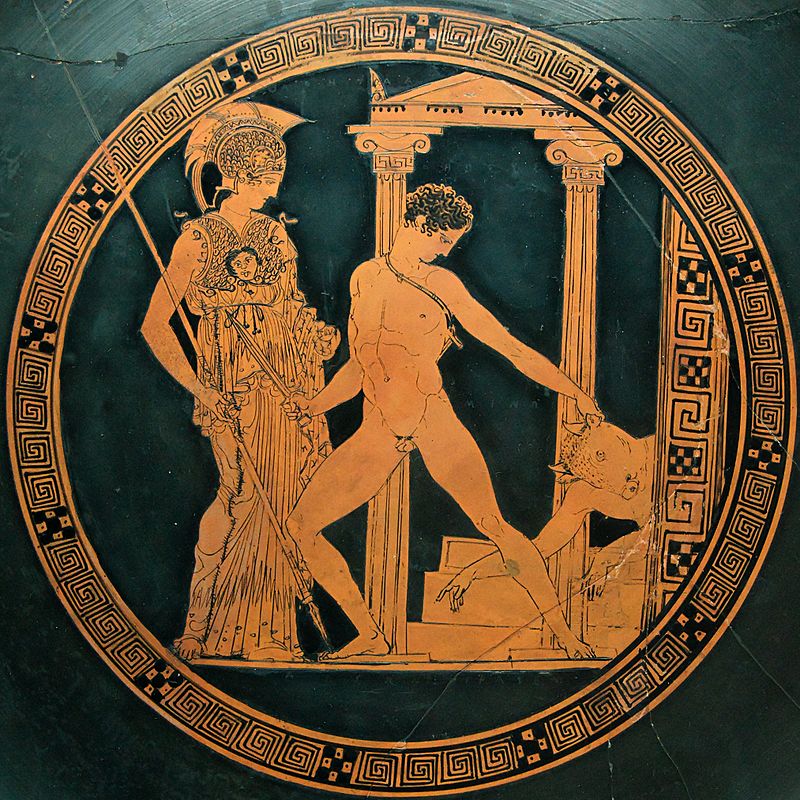
In this new post, I will try to move towards the exit of the maze, although this may be an even more complex task than Theseus’ challenge. The metaphor of frailty and, more generally, of aging as a "Minoan" maze, is not accidental: it’s a complex phenomenon where multiple systems and organs begin to be simultaneously altered, different pathologies appear and drug treatments are added. The social situation of the person and their environment can represent added elements of frailty. Besides coexisting, all these factors are interacting, determining an intricate tangle of threads of different colours that are really hard to discern. It’s as if the aging tended towards entropy, just like too many electric cables tend to become entangled. Given this complexity, it’s hopeless to pull a single thread and expect the skein to untangle. This is why "magic" recipes such as an alleged "pill" to combat aging, have failed so far. If we want different results we need a focus shift when looking at the classic "risk factor - disease - treatment".

Monday, 25 July 2016

Frail, cracked or broken?


Marco Inzitari

The concept of frailty historically has been the object of a lot of debate among those who work in the field of elderly health, with differences between epidemiological and clinical outlook.

Frail

For geriatricians the frail have for a long time been people with multiple health problems and often with an already advanced disability, such as those that can be found in hospitals or nursing homes. Epidemiological Revolution introduced by Linda Fried, a most prominent geriatrician and epidemiologist that I have already quoted in the post "Thinking differently in healthy aging", changed the paradigm in early 2000.

In plain language, she indicated as "frail" something at risk of breaking, not already "broken", as in the case of people with advanced disabilities that we mentioned. So a frail person, in this view, is a person with apparent good health, and even without a disability, which has reduced physiological reserves of different organs and systems that makes them particularly susceptible to descend towards disability in case of injuries of a different nature (clinical, such as illness, or social, as a widow, etc). Detection of frailty in this sense is mainly based on measures of physical or cognitive performance, with a clear objective of prevention, since it is proven that the frailty is reversible and targeted interventions (exercise, nutrition, geriatric assessment) can prevent disability.

Monday, 25 January 2016

Chronic Elderly Patients: new evaluative proposals for community programs


Marco Inzitari

In recent years, we have witnessed the implementation of various community programs based on proactive monitoring and secondary prevention interventions aiming to improve the health of chronically ill patients and reduce costs to the system, such as avoiding unnecessary hospitalizations. But when studies have been conducted to evaluate the effectiveness and efficiency of these studies, the results have been rather poor.


Some of these disappointing results were presented during the Congress of the European Union Geriatric Medicine Society (EUGMS). The symposium called "Strategies in primary care to promote the autonomy of frail elderly people" presented the preliminary results of three large randomized cluster studies (cluster Randomized Clinical Trial) of the Netherlands: