The clinical model based exclusively on the diagnosis and treatment of chronic diseases is precipitating medicine to fail. Addressing complex realities from partial positions is, at least, unfortunate, and despite this evidence, health care systems continue to finance the fragmented provision of services. Mary Tinetti and Terri Fried warned us in 2004, in "The end of the disease era", that it should evolve towards a bio-psycho-social model, prioritizing the integral evaluation of each person, adjusting the therapeutic plans to each reality and offering integrated services. The analysis was timely except that the authors were wrong when they predicted that, the old model would end with the advent of the new century.
Monday, 27 May 2019
Monday, 20 May 2019
Value-based healthcare: the patient's perspective
Glòria Galvez
More and more organizations are adopting the new model of value-based healthcare (VBHC) where, according to the formula developed by Michael Porter:
Results that matter to the patient
Value = ______________________________
Costs
In order for the results to be measured correctly and standardized, the International Consortium for Health Outcomes Measurement (ICHOM) -a non-profit organization recently joined by Vall d'Hebron Hospital- is defining sets of indicators standardized by clinical conditions. In this line, the Vall d'Hebron Hospital, which is implementing this new model of care, has set up working groups to define the indicators that they provide value to patients for the clinical conditions of stroke and localized prostate cancer.
Monday, 13 May 2019
Financing models do not promote value
The budgets of public health systems and those of private insurers are highly pressured by the constant emergence of new drugs, such as direct-action anti-virus to cure hepatitis C, or new technologies such as transcatheter aortic valve implants (TAVI) and logically the funders expend a lot of energy in limiting the use of these innovations. The battle, needless to say, has a predictable outcome because the conjunction of investors with the beneficiaries is usually lethal to the guardians of health expenses. An article based on American healthcare, emphasizes the waste induced by the "low cost" rates (if you are interested in the subject, I leave a second related link). The issue explained in Health Affairs would take the opposite extreme as instead of "very little but expensive activity", this analysis focuses on "a lot of very cheap activity" and, it sounds untrue, but, at least in the US, at this point there could be more waste.
Monday, 6 May 2019
The doctor gives me three weeks; can you send me to emergency department?
Pere Vivó
The train crash returns between the professionals and the managers, the perception of some users and their own reality... The best thing is to verify it: call and request a visit with your doctor at the users’ care centre and you will see that in the best of cases they will probably give you an appointment within a few days. Then try to call your doctor for a consultation over the phone; you most likely receive a call in a few minutes. Finally, go to your health centre and ask for an appointment and you will see that they will probably offer you an emergency visit within a very short time.
Monday, 29 April 2019
Mental health: involuntary treatment and its consequences
Andrés Fontalba
"If Mr. McMurphy doesn’t want to take his oral medication [...], I'm sure we can administer it in another way."
The character of nurse Mildred Ratched in One Flew Over the Cuckoo's Nest presents a serious, strict, orderly and authoritative figure, with a lot of self confidence and all her actions are carried out with the firm conviction that they are aimed at the welfare of the patients in her care. If we asked her if she takes into account the patients' point of view she would answer, without a doubt, affirmatively. The clear example appears in a discussion in which she is asked to watch a game of baseball on television where she goes the extra mile in persuading all that everyone's vote is necessary for any change in the usual programming, thus she finally manage to impose her point of view. She would not hesitate at any time to use persuasion, interpersonal influence, or even threat to guarantee the administration of a prescribed treatment.
Friday, 26 April 2019
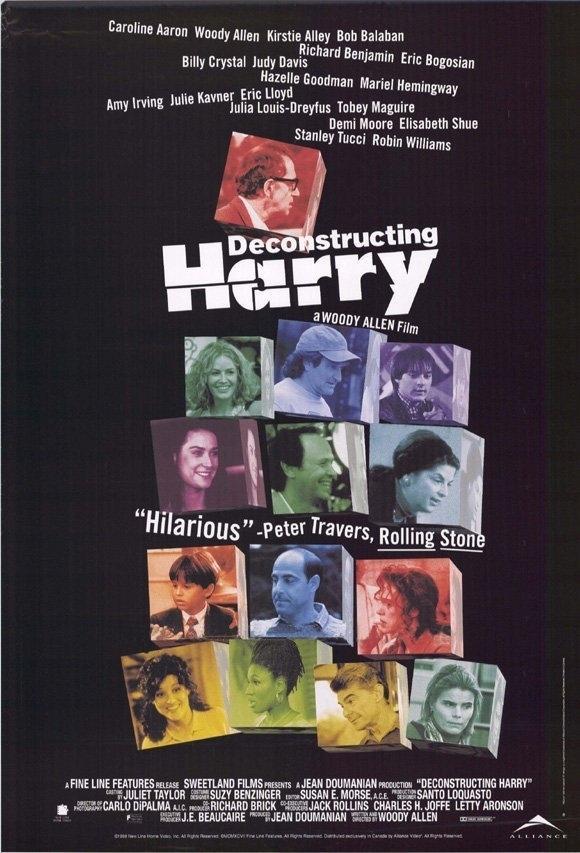
"You expect the world to adapt to your distortion"
Deconstructing Harry, a film directed by Woody Allen
From time to time I like to reread the first chapters of the Martín Zurro Family Medicine Book. Review the excellent reviews of Borrell, Gené, Casajunana, de la Revilla and many others. I try to seek inspiration and encouragement, guidance and light when the confusion or complexity I face in my clinic overwhelms me. There are days or weeks when I sail the seas of uncertainty, as Juan Gérvas would say, with sufficient dignity but in others I shipwreck when the swell of my ignorance, the shortcomings of the system or the great pressure of an unbearable number of complex patients overflow me.
Monday, 22 April 2019
The health care footprint on the planet, one more reason for right care
Cristina Roure
According to the Health and Climate Change Commission of The Lancet, the greatest opportunity in 21st century health is an adequate response to climate change. I have to confess that, had I been asked, I would surely have answered that the next revolution in health would be technological, probably connected to personalized medicine, 3D printing or electronic health.
Subscribe to:
Posts (Atom)