Friday, 26 April 2019

"You expect the world to adapt to your distortion"

Salvador Casado


Deconstructing Harry, a film directed by Woody Allen
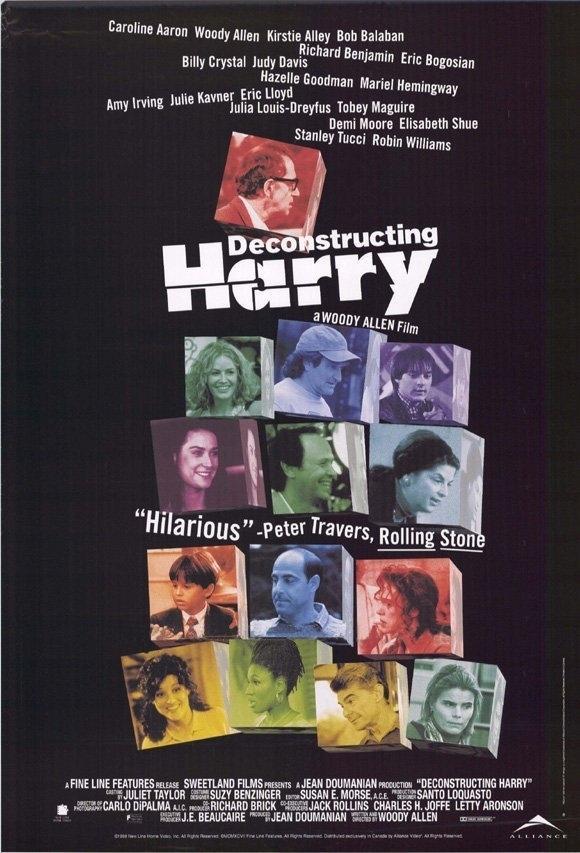
From time to time I like to reread the first chapters of the Martín Zurro Family Medicine Book. Review the excellent reviews of Borrell, Gené, Casajunana, de la Revilla and many others. I try to seek inspiration and encouragement, guidance and light when the confusion or complexity I face in my clinic overwhelms me. There are days or weeks when I sail the seas of uncertainty, as Juan Gérvas would say, with sufficient dignity but in others I shipwreck when the swell of my ignorance, the shortcomings of the system or the great pressure of an unbearable number of complex patients overflow me.

Monday, 22 April 2019

The health care footprint on the planet, one more reason for right care

Cristina Roure


According to the Health and Climate Change Commission of The Lancet, the greatest opportunity in 21st century health is an adequate response to climate change. I have to confess that, had I been asked, I would surely have answered that the next revolution in health would be technological, probably connected to personalized medicine, 3D printing or electronic health.

Monday, 15 April 2019

The hospital at home, one of the challenges of the upcoming integrated care systems

Marco Inzitari


The content of this week's article has been developed, over the past few years, with my colleague and friend Miquel Àngel Mas (@DrMqAgMas), a geriatrician, former PhD student in our research group and currently a member of the expert nucleus in chronicity of the Gerència Territorial Metropolitana Nord de l'Institut Català de la Salut. We’ll discuss the subject from two points of view in the hope of generating interest and debate among the blog followers.

Our health and social system experiences periods of rethinking, mainly due to the changing requirements in the need of attention of older adults. This fact suggests that the approach to problems solving from the big acute hospitals, as structures that works separately from the community, loses centrality. The logic that follows is the evolution towards increasingly integrated systems, adapted to the different territories, with primary care and attention to the community in the middle. As Professor Dennis L. Kodner said in his classic - Integrated care: meaning, logic, applications, and implications - without a discussion at different levels, all aspects of the provision of attention suffer: patients lose (and get lost), the services are not provided correctly (or arrive late), the quality and the satisfaction of the patients goes down and the potential for sustainability of the system diminishes.

Monday, 8 April 2019

Raiders of lost clinical reasoning


In a previous post, "Against manual medicine," I analyzed the concern of two internal physicians at Brigham and Women's Hospital for the excesses of manual medicine in their book When doctors don’t listen. Avoid misdiagnoses and unnecessary tests. on this same subject I want to talk about Jerome Kassirer, John Wong and Richard Kopelman, three authors who in 1991 published Learning Clinical Reasoning, a reference work that laid the foundations of clinical reasoning through the inferential process of hypothesis generation diagnosis, its subsequent refinement with the elaboration of a diagnosis of work, the sustained request of complementary tests, the management of Bayes' theorem, the causal models, the diagnostic verification and the taking of therapeutic decisions. Twenty years later, the same authors published the second edition of the book, and in their presentation said they were forced to update it because in recent times, the practice of medicine had undergone very profound changes. According to them, rapid triage in emergencies and reduction of hospital stays are forcing doctors to be less contemplative and they are often seen short-circuiting the diagnostic process, or by cutting out minutes of time spent in interviewing or exploring where they try to compensate by quickly sending patients to perform diagnostic tests. This obsession with the performance of physicians is detrimental to the reflection on what has been learned in the observations made and the establishment of a qualified relationship with the patient. The authors state that the diagnostic process, as it was known, has been replaced by "take a look and ask for a CT".

Monday, 1 April 2019

Blockchain and crypto management

Tino Martí


In the 2018 edition of the Mobile World Congress has drawn to a close. Among the different technologies exhibited this week at the mobile fair, the chain of blocks or blockchain has appeared tangentially. Announced as the new revolution in the digital world - which some consider as disruptive as the internet - the block chain is the technology that allows the popular bitcoin crypto currency to work and whose value has reached unimaginable value (exceeded $ 18,000 last December).

But what is really the block chain and how can it be of interest to the readers of Advances in Clinical Management?

Blockchain is a distributed database system that allows transactions between agents to be both secure and anonymous by means of a trusted timestamp in the distributed public registry (distributed ledger). Although its best known application is to carry out operations with cryptocurrencies such as bitcoin or ethereum, the chain of blocks can also be used to manage valuable elements such as certificates, insurance or votes, and is being widely experienced in different sectors such as finance, logistics or food.

Monday, 25 March 2019

Five Clinical Practice Lessons from the Nobel Prize in Economics

Pedro Rey


The 2017 Nobel Prize in Economics was awarded to Richard H. Thaler ,from the University of Chicago, for his contributions to behavioural economics. As I have explained before, this discipline combines the teachings of economics and psychology to better understand and predict human behaviour and to help us make better decisions, especially in areas such as health, where the combination of having to take many decisions involving risk and having to share private information with people with whom our incentives are not always perfectly aligned, makes us sensitive to multitude of emotions, failures of rationality and psychological biases.

Monday, 18 March 2019

Child care: a nursing perspective

Alba Brugués


Do all professionals working in primary care develop their professional skills adequately? My answer is no, and I believe that the paediatric service of primary care is one of the services in which there is more room to rethink the model of care. To make it easier, I will explain the model of childhood health (this is how I like to express it) that we have been developing for some years at the Can Bou Health Center (CASAP). A model that is gradually becoming known and extended to other primary care centres and which has been presented to national and European congresses and has received great interest on the part of managers and experts in paediatrics and who, at the moment, is offering specific training for those who want to a change orientation of the care of children and their families in primary care.