Showing posts with label Glasziou P.. Show all posts

Monday, 15 July 2019

It’s estimated that the waste in biomedical research reaches 85%


In 2014, following concerns over the poor quality of biomedical research, The Lancet published a series of 5 articles analysing the scope of the problem and proposing solutions and as a result of this Reward Alliance was born, a platform that aims to defend the value of the research, from which I have extracted the scandalous figure of 85% and, according to Paul Glasziou and Iain Chalmers, two of the leaders of the movement, the volume of money squandered by biomedical research could reach 170 billion dollars annually, an amount higher than Hungary's gross domestic product. The two authors, who already predicted this figure in 2009, argue that this amount comes from an accumulation of up to three times 50%.

Monday, 2 April 2018

Plea for the end of clinical practice guidelines


James McCormack, a professor of pharmacy at British Columbia University, posted on his YouTube channel, a video clip that adapts the song of the Traveling Wilburys group, "End of the Line", to become "End of the Guidelines". The video begins with a scene from “Life of Brian" where the actor Graham Chapman as a fake Jesus Christ, addresses his followers from the window of his house and says: "You are wrong; you have no need to follow me. Follow no one; be yourselves, each of you is a different person."


Monday, 9 November 2015

Last century belonged to the doctor, this one should belong to the patient


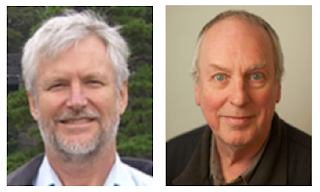
This twitter account, @enferevidente, specializing in clinical safety, has offered us the link to a paper on the history of the EBM which is a jewel in itself. If you click on the tweet, you may access a collaboratively edited video from the British Medical Journal and The JAMA Network. It’s a chat, moderated by Richard Smith, where Gordon Guyatt, Kay Dickersin, Drummond Rennie, Brian Haynes and Paul Glasziou – all ‘parents’ of EBM. There are also connections with David Sakkett, Iain Chalmers and Muir Gray. If you wish to press the play button (do it through the link in the tweet), you will see how veteran scientists explain their conversion to the, new (at that time) way of seeing clinical research, along with their views on the current circumstances.


The future of EBM from its "parents"

What interested me most, however, was the last round of the chat, when Richard Smith questions the guests about how they see the future of EBM and clinical practice, and on this I made some notes as follows:

Monday, 23 March 2015

How to diagnose overdiagnosis

In a BMJ editorial, within the framework of the campaign "Too much medicine," Professor Paul Glasziou and editor Fiona Godlee, among others, spoke of the phenomenon of overdiagnosis and analysing their characteristics, and since this is a trending concept, I think it's a good idea to pay attention to it.

In a medicine previous to cancer screening programs as we know them today, people were diagnosed according to the appearance of the first symptoms. It was the visible tip of the iceberg. But as it was suspected that when the symptoms appeared, the illness simmered below the clinical perception for long time, it was believed it was necessary to develop diagnostic techniques to allow seeing the iceberg below the water, with the assumption that the sooner the pathological process in motion is detected the sooner is possible to act, therefore obtaining a better prognosis.

But now we can see that things did not fully go as intended. In general, we can affirm that thanks to screening programs forecasts have improved, but unfortunately the mortality rates are the same, and voices criticizing this rummaging through the invisible parts of the iceberg, have enough arguments to defend that while early diagnosis may detect many cases that perhaps wouldn’t have emerged at all, this is done at the expense of improving survival rates in an artificial way.